You can build a Laravel API quickly. That part is easy. The harder part is building an API that mobile apps, frontend teams, integrations, and future you can depend on without guessing.
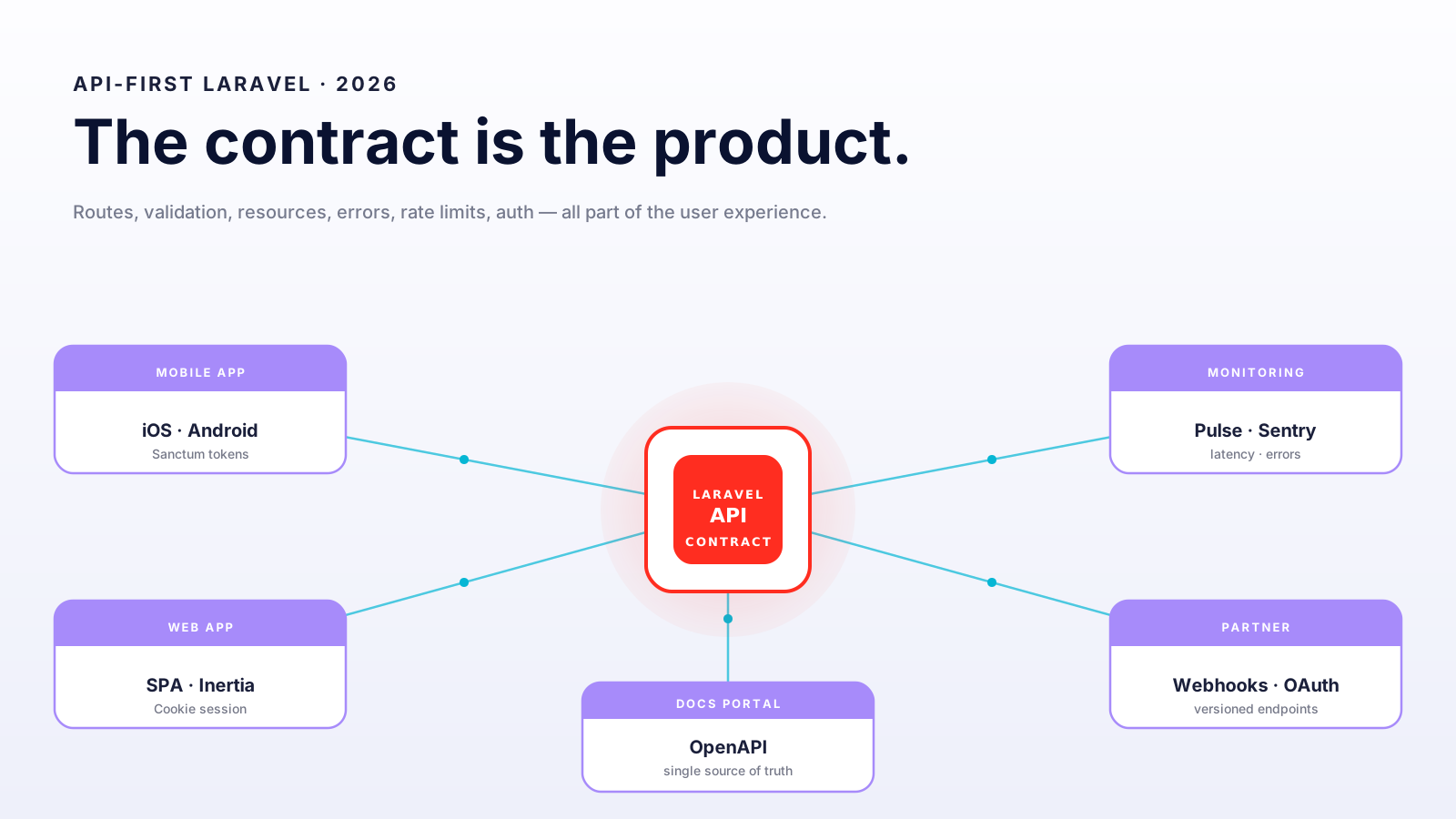
An API-first Laravel application is not just "Laravel without Blade." It means your API contract is the product surface. Routes, validation, resources, errors, rate limits, authentication, and documentation all become part of the user experience.
That sounds heavier than it is. It's really just treating your API like a public promise instead of a private controller detail.
Start With The Contract, Not The Controller
The controller is implementation. The API contract is the agreement.
A good contract answers:
- What does the endpoint do?
- What input does it accept?
- What does success look like?
- What does failure look like?
- Who can call it?
- What limits apply?
If that information only exists inside controller code, every consumer has to reverse-engineer the API like an archaeologist brushing dust off old bones.
A clean route file already tells part of the story:
Route::prefix('v1')
    ->middleware(['auth:sanctum', 'throttle:api'])
    ->group(function () {
        Route::apiResource('projects', ProjectController::class);
        Route::post('projects/{project}/archive', ArchiveProjectController::class);
    });
The version prefix, authentication, and rate limiting are not decoration. They are part of the contract.
Authentication: Sanctum Is Still The Practical Default
For many Laravel APIs, Sanctum is the practical choice. It supports API tokens and SPA authentication patterns without forcing you into a heavy OAuth setup.
For internal dashboards, mobile apps, and first-party clients, Sanctum often hits the sweet spot.
This example issues a token after credentials are verified:
public function store(LoginRequest $request)
{
    $user = User::where('email', $request->email)->firstOrFail();

    if (! Hash::check($request->password, $user->password)) {
        throw ValidationException::withMessages([
            'email' => ['Invalid credentials.'],
        ]);
    }

    return [
        'token' => $user->createToken('mobile-app')->plainTextToken,
    ];
}
The token is not the whole security story. You still need scopes/abilities, expiration decisions, device management, logging, and revocation behavior.
Auth is like the front desk of a hotel. Checking the ID is step one. You still need room keys, access rules, and a record of who entered.
API Resources Make Responses Intentional
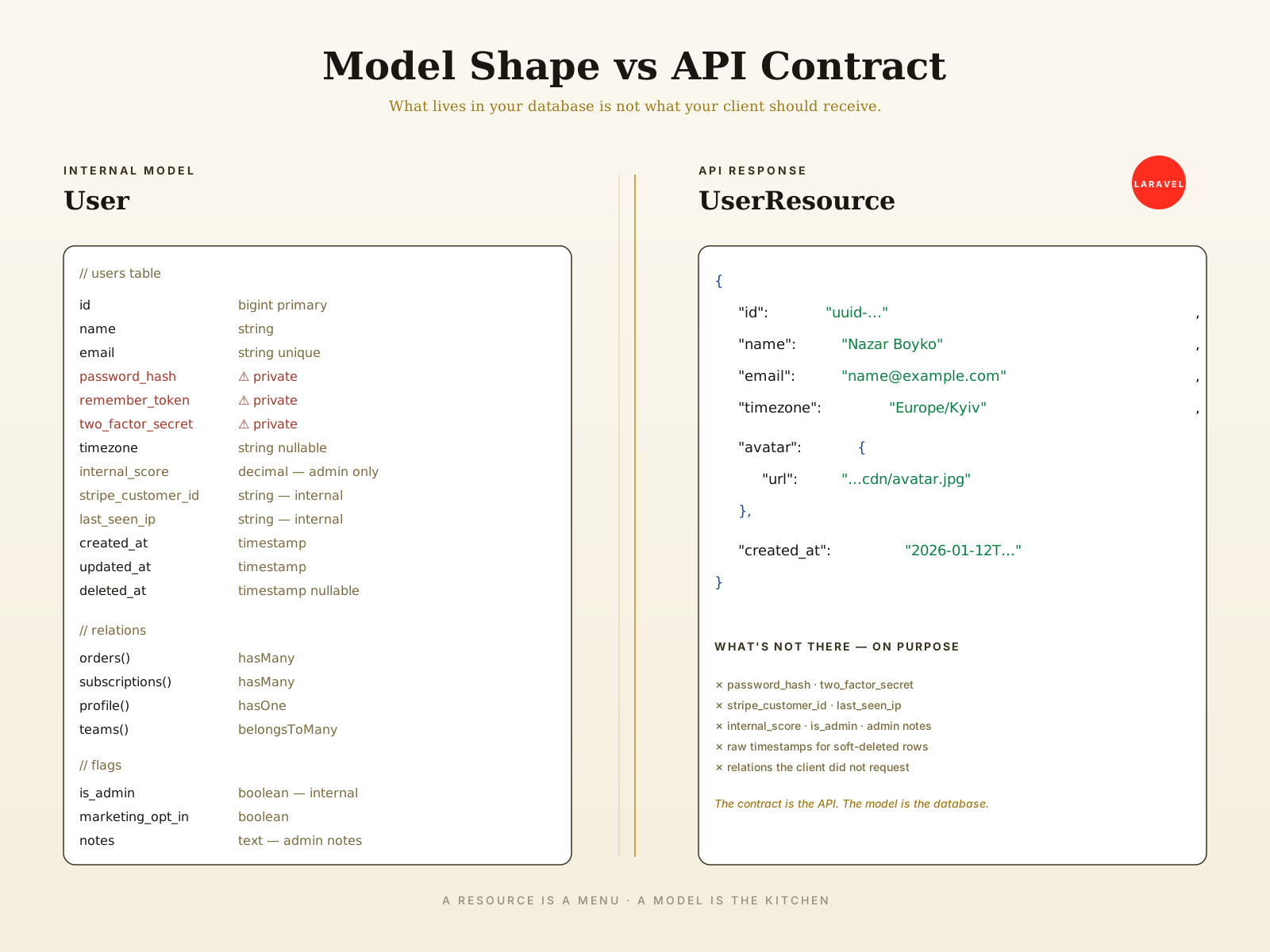
Returning models directly is convenient until your database shape leaks into your API.
API resources give you a boundary between internal models and external responses.
class ProjectResource extends JsonResource
{
    public function toArray(Request $request): array
    {
        return [
            'id' => (string) $this->id,
            'name' => $this->name,
            'status' => $this->status,
            'owner' => new UserSummaryResource($this->whenLoaded('owner')),
            'created_at' => $this->created_at?->toISOString(),
        ];
    }
}
This lets you rename columns, hide fields, add computed values, and shape nested data without breaking consumers.
A resource is like a restaurant menu. The kitchen may be chaotic, but the guest sees a clean, intentional list of dishes.
Validation Belongs At The Boundary
A Form Request is one of the best places to define API input rules.
This example validates project creation:
class CreateProjectRequest extends FormRequest
{
    public function rules(): array
    {
        return [
            'name' => ['required', 'string', 'max:120'],
            'visibility' => ['required', Rule::in(['private', 'team'])],
            'starts_at' => ['nullable', 'date'],
        ];
    }
}
Then the controller stays small:
public function store(CreateProjectRequest $request)
{
    $project = Project::create($request->validated());

    return new ProjectResource($project);
}
The request validates input. The resource formats output. The controller coordinates. That separation sounds boring, but boring is exactly what you want in an API.
A Consistent Error Envelope
The day a mobile team asks "what does an error look like?" is the day you wish you'd standardized.
Pick one envelope shape early and use it everywhere. A common, friendly shape looks like this:
{
  "error": {
    "code": "validation_failed",
    "message": "The data you sent failed validation.",
    "fields": {
      "name": ["The name field is required."],
      "visibility": ["The visibility must be one of: private, team."]
    },
    "request_id": "01HZK9X7RT9JX5..."
  }
}{
"error": {
"code": "project_not_found",
"message": "We could not find a project with that ID.",
"request_id": "01HZK9X7RT9JX5..."
}
}A small exception handler is enough to make this consistent across the app:
->withExceptions(function (Exceptions $exceptions) {
    $exceptions->render(function (ValidationException $e, Request $request) {
        return response()->json([
            'error' => [
                'code' => 'validation_failed',
                'message' => 'The data you sent failed validation.',
                'fields' => $e->errors(),
                'request_id' => $request->headers->get('X-Request-Id'),
            ],
        ], 422);
    });
})
Two things matter more than the exact shape:
- The same shape every time. Frontends parse this; if it shifts, every client breaks.
- A
request_idyou can grep. Support tickets that include the ID save hours of log spelunking.
Idempotency Keys Save Real Money
Networks fail. Mobile clients retry. Webhook providers resend. If the same POST /payments lands twice, you do not want two charges.
The standard fix is an idempotency key — a unique string the client sends with the first request, and the server uses to recognize duplicates.
POST /v1/payments HTTP/1.1
Idempotency-Key: 7c1e9a36-ef33-4c0e-9c1d-3f9d6e2a07b1
Content-Type: application/json

{ "amount_cents": 4999, "order_id": 1042 }
A simple middleware can look up the key in cache and return the previous response if it exists:
public function handle(Request $request, Closure $next)
{
    $key = $request->header('Idempotency-Key');

    if (! $key) {
        return $next($request);
    }

    $cacheKey = 'idempotent:' . $request->user()->id . ':' . $key;

    if ($cached = Cache::get($cacheKey)) {
        return response()->json($cached['body'], $cached['status']);
    }

    $response = $next($request);

    Cache::put($cacheKey, [
        'status' => $response->status(),
        'body' => json_decode($response->getContent(), true),
    ], now()->addHours(24));

    return $response;
}
Two important rules: scope keys to the authenticated user (so they can't collide between tenants), and only cache successful responses for write endpoints. A failed request should be retryable.
For payment-style flows, also send the same key down to the payment provider. Stripe, Adyen, and most providers accept idempotency keys natively, which means a retry never produces two charges.
Versioning Is A Product Decision
Versioning is not only about routes. It's about compatibility.
You can use URL versioning, header versioning, or media types. Laravel doesn't force one model, which is good and dangerous.
A simple API can start with route prefixes:
Route::prefix('v1')->group(base_path('routes/api_v1.php'));
Route::prefix('v2')->group(base_path('routes/api_v2.php'));
But versioning every tiny change is overkill. The better question is: does this break an existing consumer?
Breaking Changes Usually Include
- Removing fields — Clients may depend on them.
- Changing field types —
"id": 1to"id": "1"can break strict clients. - Changing error formats — Frontends often parse validation errors.
- Changing pagination shape — Mobile apps may rely on metadata.
- Changing authentication behavior — Token flows are fragile.
Treat breaking changes like moving someone's mailbox. You can do it, but you'd better warn them first.
Rate Limits Protect Your System And Your Users
Rate limiting is not punishment. It's traffic control.
Laravel's rate limiting features let you define named limiters and apply them to routes.
->withRouting(
    api: __DIR__.'/../routes/api.php',
)
->withMiddleware(function (Middleware $middleware) {
    //
})
In modern Laravel apps, API middleware and rate limit configuration usually live close to the application bootstrap and route configuration. The exact structure depends on your Laravel version, but the principle stays the same: limits should be visible, intentional, and tested.
A public API without rate limits is like a store with no door. Most people behave, but one bad script can ruin the day.
OpenAPI Keeps Humans Honest
An API contract should not live only in someone's memory.
OpenAPI documentation gives frontend engineers, mobile developers, QA, and external consumers a shared reference. You can generate it from annotations, maintain it manually, or use tools that derive docs from routes and requests.
The important part is consistency:
- Document request bodies — Don't make clients guess accepted fields.
- Document response examples — Real examples reduce integration confusion.
- Document errors — Error contracts matter as much as success contracts.
- Document auth — Include token format, abilities, and expiry behavior.
- Document pagination — Cursor and offset behavior should be explicit.
OpenAPI is like a city map. The roads still exist without it, but everyone wastes less time when the map is accurate.
Final Tips
I've seen APIs where the backend team thought an endpoint was "internal," then a mobile app depended on it for three years. After that, every field became a contract whether anyone admitted it or not.
Going forward, design Laravel APIs as if another team will depend on them without asking you questions. Because eventually, that team might be you six months later.
Make the contract clear, keep responses stable, and your API will feel boring in the best possible way. Go ship it 👊