You start a fresh Laravel 12 project. By the time the installer finishes, you've already been offered Sanctum, Reverb, Pennant, Horizon, Telescope, Pulse, and a starter kit. Open the app two months in, and you'll usually find half of them installed — and a TODO next to each one.
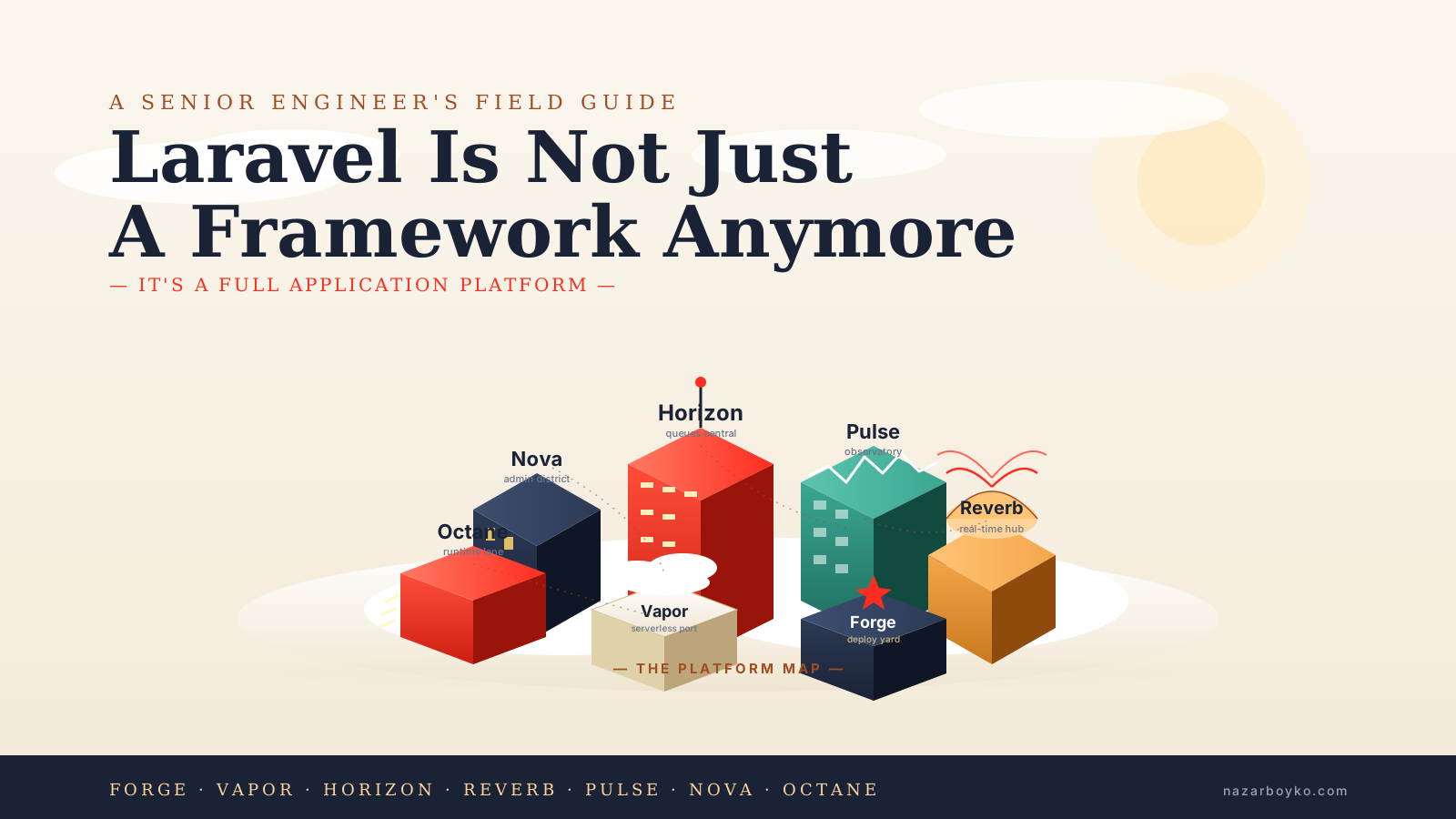
That's the real story of modern Laravel. It used to be "a clean MVC framework with friendlier syntax than Symfony." In 2026 it behaves more like a small platform: deployment (Forge, Vapor), queues (Horizon), real-time (Reverb), monitoring (Pulse), admin (Nova), high-performance runtime (Octane). The framework didn't get bigger by accident — it grew because that's what production teams actually need.
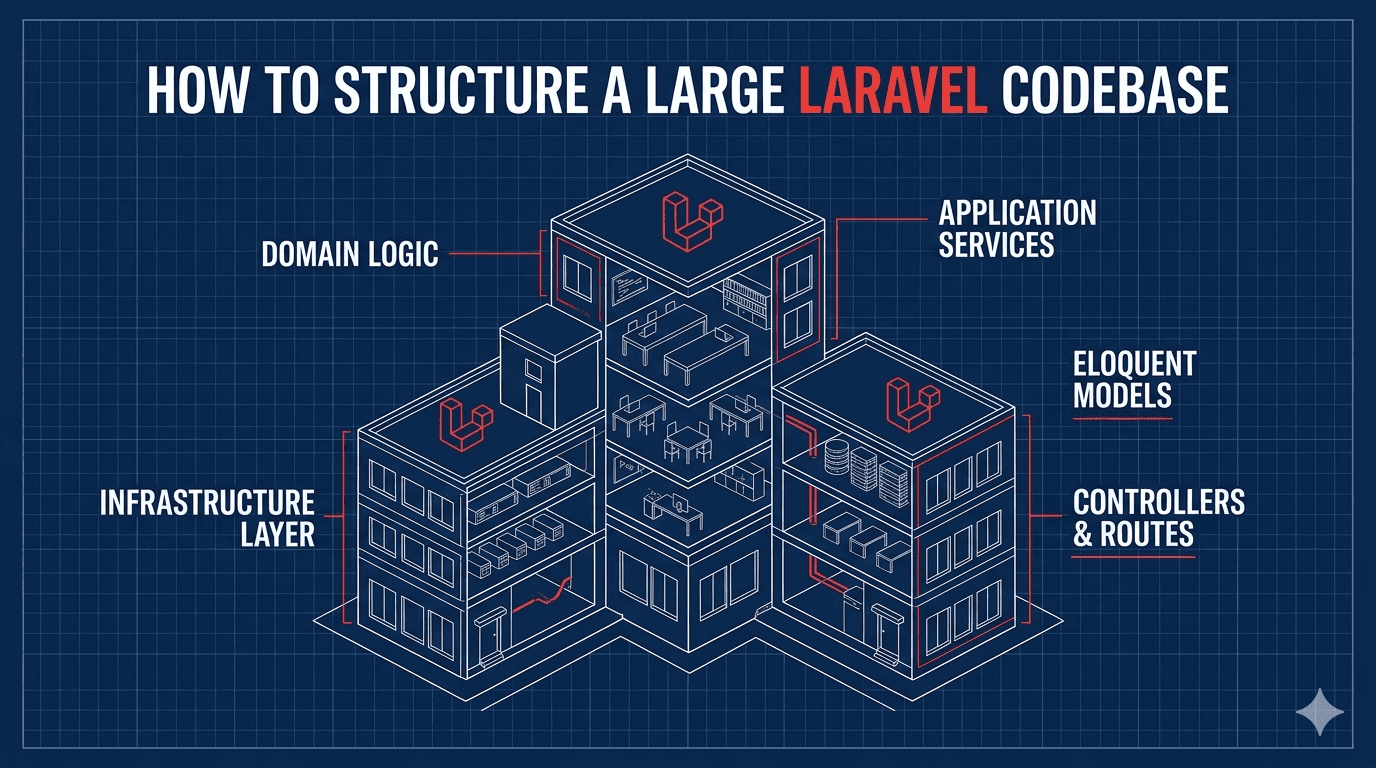
The trap is treating the ecosystem like a checklist. Real senior engineering still comes down to one thing the platform can't do for you: deciding where your boundaries live.
The Kitchen Analogy That Survives The Tools
A growing Laravel app is a kitchen. Controllers are waiters taking orders. Models are the pantry. Queues are the prep stations doing slow work. Policies are the bouncer at the VIP rope. Logs are the manager's notebook.
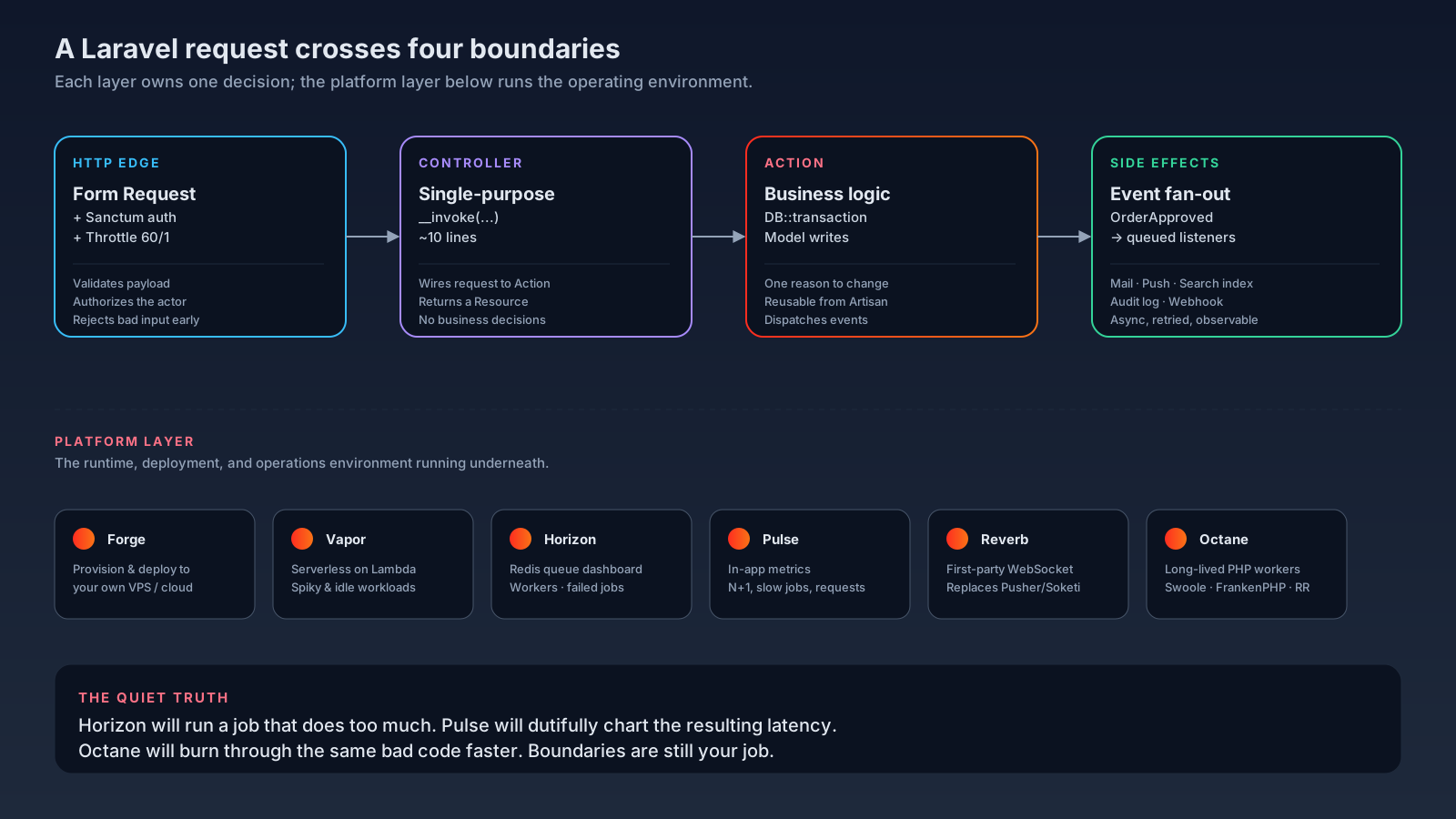
If your waiter is also cooking, taking inventory, and bouncing rowdy guests, service breaks down — and the platform tools don't fix that. Horizon will happily run a job that does too much. Pulse will dutifully chart the resulting latency. Octane will burn through the same bad code faster.
A healthy boundary in a Laravel app does three things:
- It has one reason to change. A validation rule shouldn't know about Stripe webhooks. A controller shouldn't know about queue connection names.
- It is testable on its own. You can verify the decision without booting the HTTP kernel or spinning up a browser.
- It fails out loud. When something breaks, the type of failure is obvious — authorization vs. validation vs. database vs. queue.
That third one is the one teams get wrong most. Laravel makes it so easy to swallow exceptions that "it just stopped working" becomes a debugging style.
The Two Files That Decide Whether This Scales
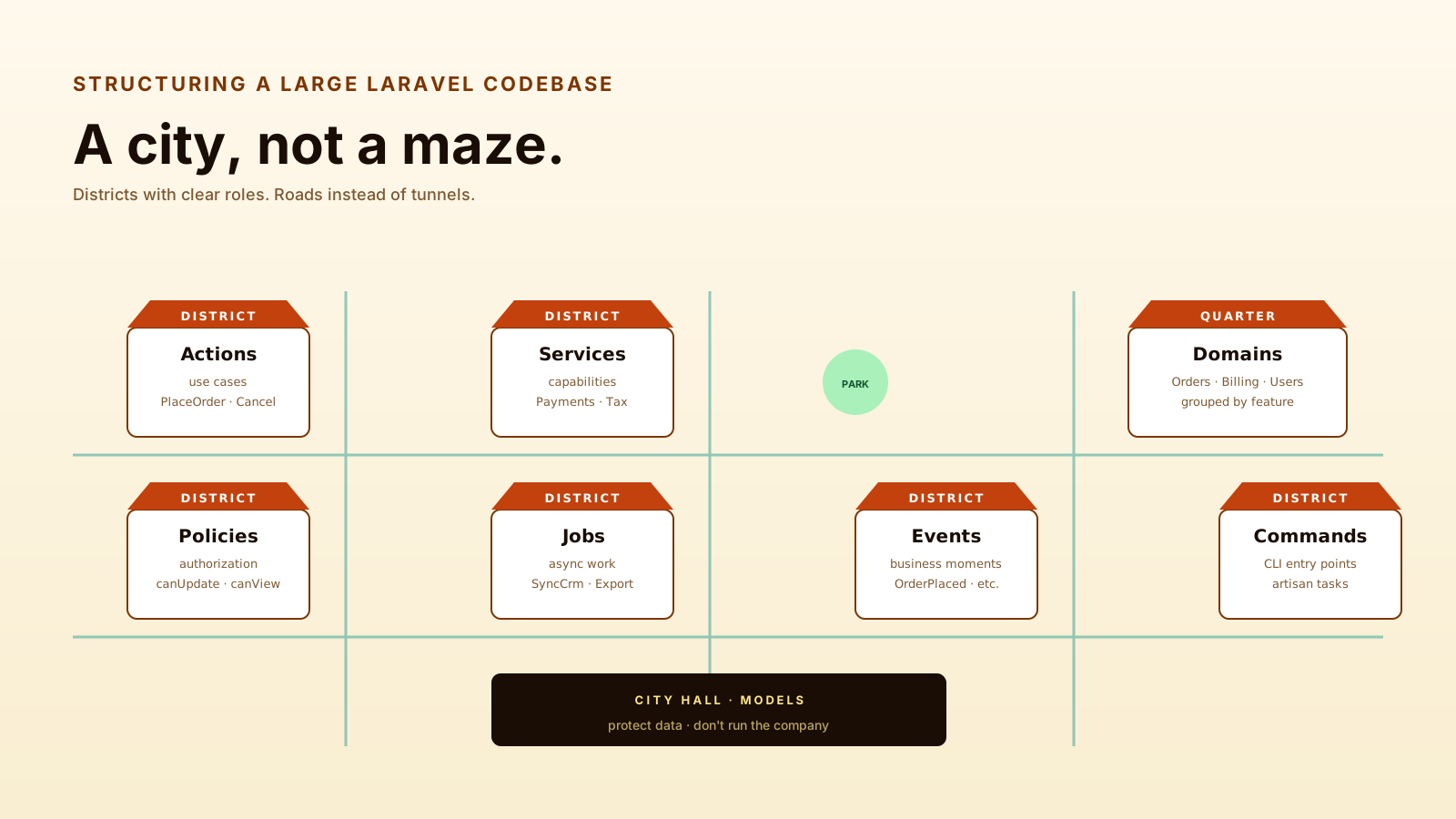
Most Laravel teams know the controller pattern. Fewer teams use it consistently. The shape that holds up under growth is: single-purpose invokable controllers + Action classes for the work.
// routes/api.php
use App\Http\Controllers\Orders\ApproveOrderController;
use Illuminate\Support\Facades\Route;

Route::middleware(['auth:sanctum', 'throttle:60,1'])
    ->prefix('v1')
    ->group(function () {
        Route::post('orders/{order}/approve', ApproveOrderController::class)
            ->name('orders.approve');
});// app/Http/Controllers/Orders/ApproveOrderController.php
namespace App\Http\Controllers\Orders;
use App\Actions\Orders\ApproveOrder;
use App\Http\Requests\Orders\ApproveOrderRequest;
use App\Http\Resources\OrderResource;
use App\Models\Order;
final class ApproveOrderController
{
public function __invoke(
ApproveOrderRequest $request,
Order $order,
ApproveOrder $action,
): OrderResource {
$approved = $action->execute($order, $request->user(), $request->validated());
return OrderResource::make($approved);
}
}// app/Actions/Orders/ApproveOrder.php
namespace App\Actions\Orders;
use App\Events\OrderApproved;
use App\Models\Order;
use App\Models\User;
use Illuminate\Support\Facades\DB;
final class ApproveOrder
{
public function execute(Order $order, User $approver, array $payload): Order
{
return DB::transaction(function () use ($order, $approver, $payload) {
$order->fill([
'status' => 'approved',
'approved_by' => $approver->id,
'approved_at' => now(),
'notes' => $payload['notes'] ?? null,
])->save();
OrderApproved::dispatch($order->fresh());
return $order;
});
}
}Three tiny files, one obvious story. The ApproveOrderRequest handles validation and policy authorization at the edge. The controller does nothing but wire the request to the Action. The Action owns the transaction, the model writes, and the event fan-out. Six months from now, when someone needs to approve orders from a Slack command or a scheduled task, you call ApproveOrder::execute(...) and skip the HTTP layer. No copy-paste.
The Traps That Hurt Six Months Later
The dangerous mistakes in Laravel are rarely architectural earthquakes. They're convenient shortcuts that compound.
- Fat controllers. "It's just one endpoint" turns into 200 lines, and then the same logic is needed in an Artisan command. Now you have two copies and one is already drifting.
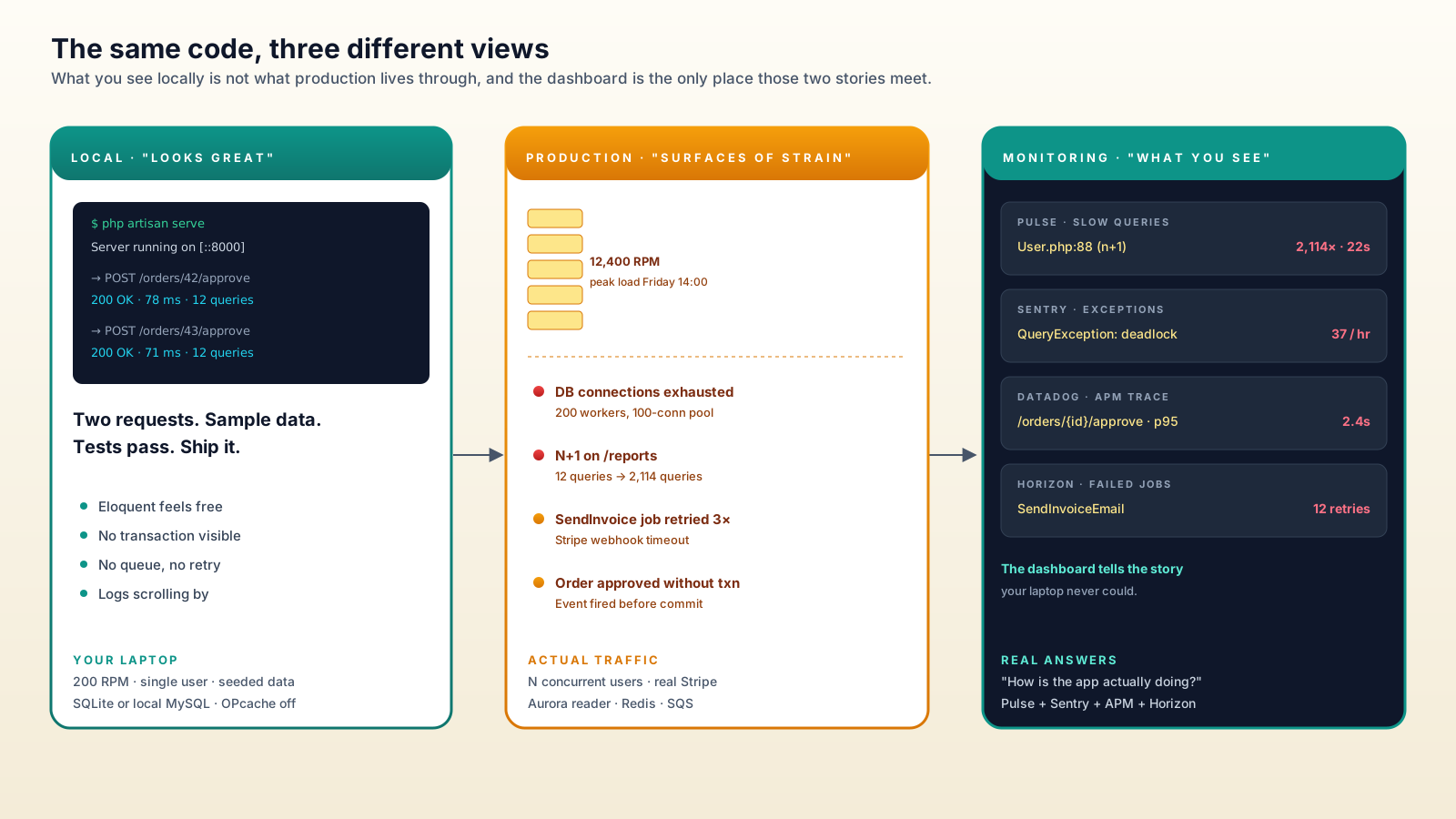
- Trusting Eloquent without watching the SQL. The N+1 query is the most expensive accidental feature in the framework. Use
with()deliberately, log queries in dev, and reach for the Laravel Debugbar orDB::listen()until counting queries becomes a habit. - Queues as a trash bin. Dispatching to a queue does not make code reliable. Without
tries,backoff(),retryUntil(), and a real failed-jobs handler, you've moved the problem somewhere harder to debug. - Eager observability via Pulse only. Pulse is excellent for in-app metrics, but it lives in your database. The day your DB is on fire is exactly the day you need an external signal — Sentry, Datadog, or even a basic Logflare/Axiom log drain.
Test The Decisions, Not The Framework
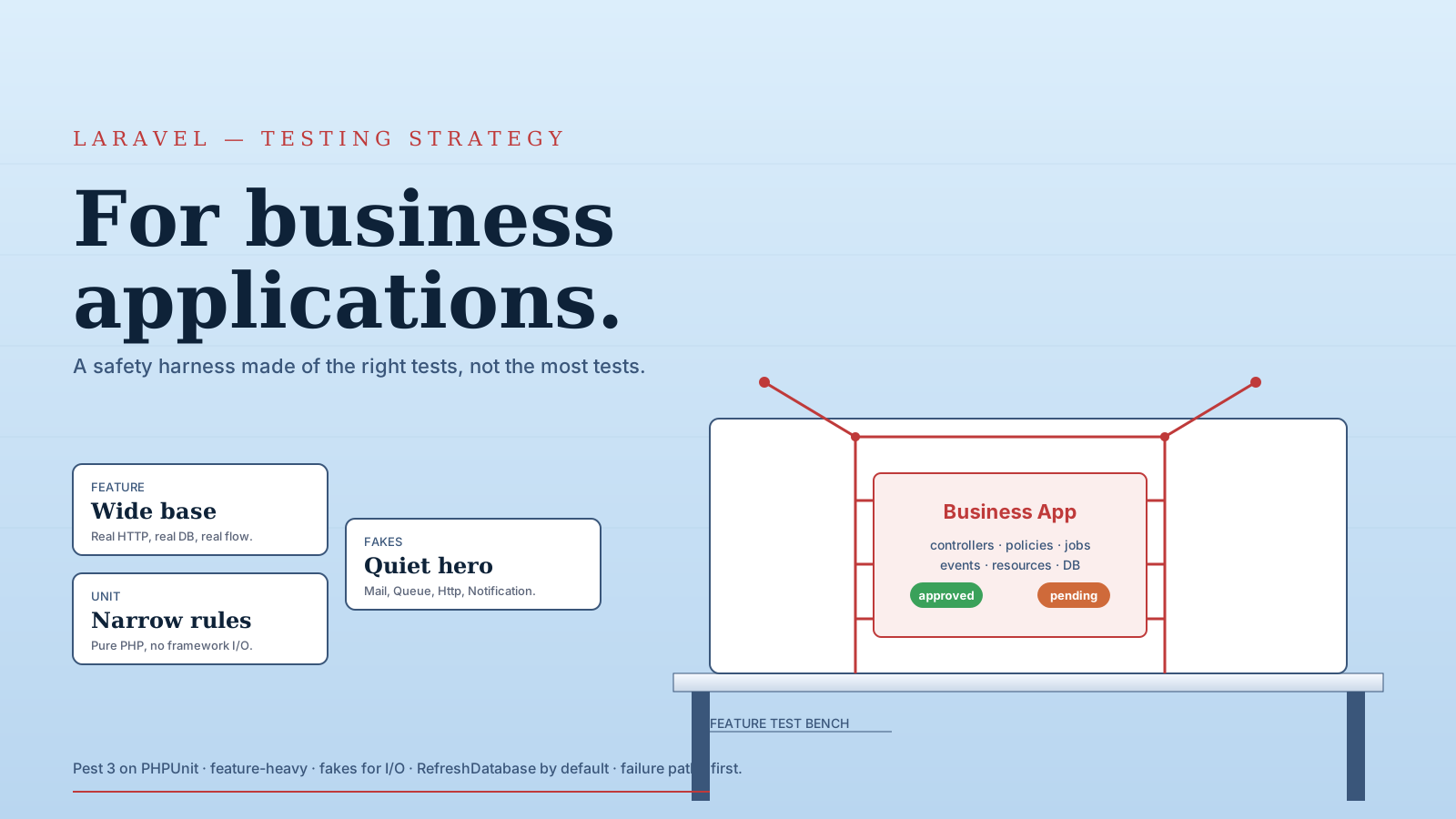
You don't need to write tests proving Laravel's router works. The Pest tests that pay rent are the ones that pin down business rules.
// tests/Feature/Orders/ApproveOrderTest.php
use App\Models\Order;
use App\Models\User;
use function Pest\Laravel\actingAs;

it('forbids customers from approving orders', function () {
    $customer = User::factory()->create(['role' => 'customer']);
    $order    = Order::factory()->pending()->create();

    actingAs($customer)
        ->postJson(route('orders.approve', $order))
        ->assertForbidden();

    expect($order->fresh()->status)->toBe('pending');
});

it('records who approved an order and when', function () {
    Event::fake([OrderApproved::class]);

    $manager = User::factory()->create(['role' => 'manager']);
    $order   = Order::factory()->pending()->create();

    actingAs($manager)
        ->postJson(route('orders.approve', $order), ['notes' => 'OK to ship'])
        ->assertOk();

    $fresh = $order->fresh();
    expect($fresh->status)->toBe('approved');
    expect($fresh->approved_by)->toBe($manager->id);
    Event::assertDispatched(OrderApproved::class);
});
These two tests cover the rules that matter: a permission boundary and a state transition with a side effect. They run in seconds, fail loudly, and don't break when you upgrade Laravel.
When To Actually Install The Ecosystem
Laravel's platform tools earn their keep when you have the problem they solve, and not before:
- Forge or Vapor. Forge for a couple of always-on servers; Vapor when traffic is spiky and you'd rather pay AWS than manage Nginx. Don't reach for either on day one — a single
$10VPS with a deploy script is fine until it isn't. - Horizon. The moment you have more than one queue worker on Redis, you want Horizon's dashboard. Before that,
php artisan queue:workand a log drain are enough. - Reverb. Laravel's first-party WebSocket server (shipped with Laravel 11) replaces Pusher/Soketi for most cases. Use it when you actually have real-time UI; don't wire it up "just in case".
- Pulse. Drop-in performance dashboard. Worth installing early — it's small, it surfaces slow queries, slow jobs, and slow requests, and the data lives in your DB.
- Nova. Pay-once admin panel. If your back-office team needs to edit twenty models a day, Nova is cheaper than building it twice.
- Octane. Worth the operational cost only when you can measure that PHP boot time is the bottleneck. A normal CRUD app on PHP-FPM 8.3 is fast enough.
The framework gives you the building blocks. The ecosystem gives you the operating environment. Boundary design is what makes both worth using.
A One-Sentence Mental Model
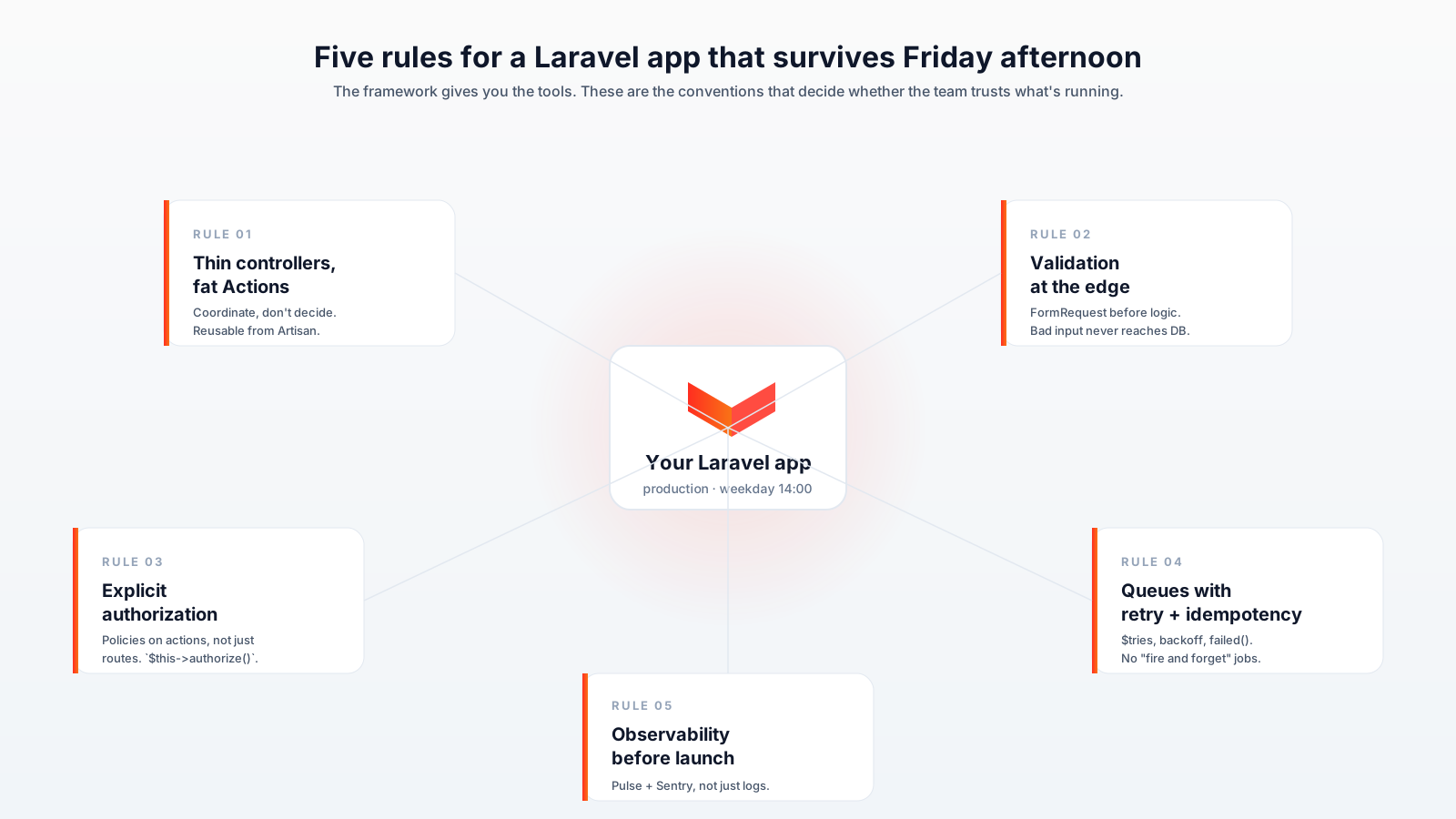
Modern Laravel is a platform that runs your application — Forge deploys it, Horizon drains it, Pulse watches it, Reverb pushes from it, Octane speeds it up — but the part that decides whether it survives at scale is still a thin controller calling a single-purpose Action across a clean boundary you wrote yourself.