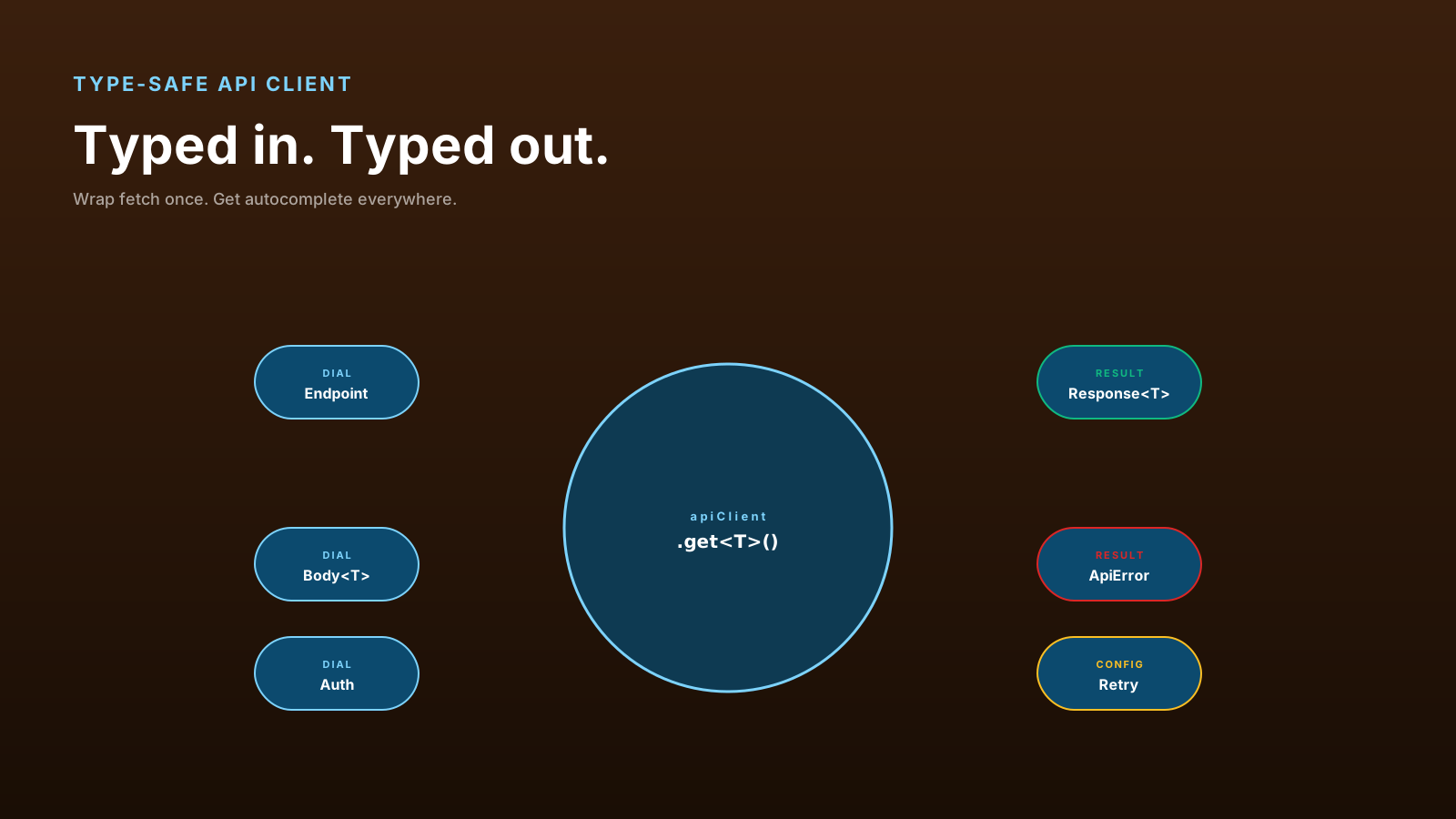
A type-safe API client is one of the highest-leverage things you can build in a TypeScript app. Done well, every endpoint call autocompletes, every response is validated, every error has a known shape, and refactors across the codebase cost minutes instead of hours.
Done poorly, you get a generic fetch wrapper with as any sprinkled around. Let's build the good version.
Start With A Small Fetch Wrapper
The base layer is intentionally small — one function that handles the things every endpoint needs the same way: serialization, headers, base URL, JSON parsing.
type RequestOpts = {
  method?: 'GET' | 'POST' | 'PATCH' | 'DELETE';
  body?: unknown;
  headers?: Record<string, string>;
  signal?: AbortSignal;
};

class HttpError extends Error {
  constructor(
    public status: number,
    public body: unknown,
    public requestId?: string,
  ) { super(`HTTP ${status}`); this.name = 'HttpError'; }
}

const BASE_URL = process.env.NEXT_PUBLIC_API_URL ?? '';

export async function http(path: string, opts: RequestOpts = {}): Promise<unknown> {
  const res = await fetch(`${BASE_URL}${path}`, {
    method: opts.method ?? 'GET',
    headers: {
      'content-type': 'application/json',
      ...opts.headers,
    },
    body: opts.body ? JSON.stringify(opts.body) : undefined,
    signal: opts.signal,
  });

  const requestId = res.headers.get('x-request-id') ?? undefined;
  const body = res.status === 204 ? null : await res.json().catch(() => null);

  if (!res.ok) throw new HttpError(res.status, body, requestId);
  return body;
}
Notice the return type is Promise<unknown> — not Promise<T> with a generic. We don't trust the response yet. Type safety comes from the layer above.
Parse Responses At The Edge
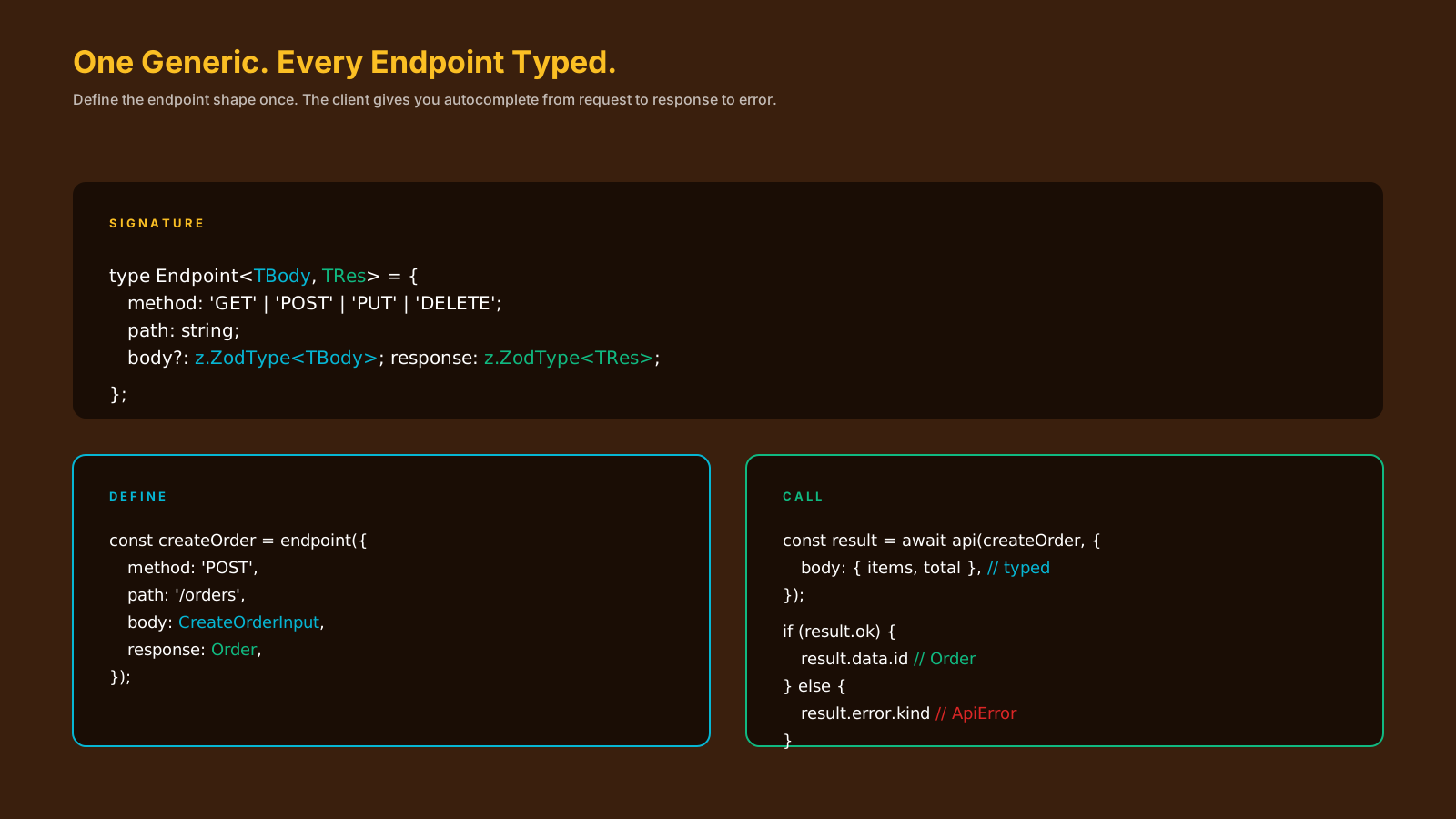
Layer two: an endpoint definition that carries its own schema. Every call validates the response against the schema, so the typed return is also runtime-checked.
import { z, ZodSchema } from 'zod';

type Endpoint<I, O> = {
  path: (input: I) => string;
  method?: 'GET' | 'POST' | 'PATCH' | 'DELETE';
  input?: ZodSchema<I>;     // request body schema (for POST/PATCH)
  output: ZodSchema<O>;     // response schema
};

export async function call<I, O>(
  ep: Endpoint<I, O>,
  input: I,
  opts: { signal?: AbortSignal } = {},
): Promise<O> {
  const body = await http(ep.path(input), {
    method: ep.method,
    body: ep.method && ep.method !== 'GET' ? input : undefined,
    signal: opts.signal,
  });
  return ep.output.parse(body); // validates and returns typed
}
Now every endpoint is a small declarative object:
const UserSchema = z.object({
  id: z.string(),
  email: z.string().email(),
  name: z.string(),
});

export const getUser: Endpoint<{ id: string }, z.infer<typeof UserSchema>> = {
  path: ({ id }) => `/users/${id}`,
  output: UserSchema,
};

const user = await call(getUser, { id: '42' });
// user is { id: string; email: string; name: string } — typed AND validated
One schema. Compile-time type. Runtime check. No drift between them, ever.
Return Results Instead Of Throwing Everywhere
Throwing is convenient until error handling becomes the dominant code in your hooks. A Result type makes errors first-class data:
type Result<T, E = HttpError> =
  | { ok: true; data: T }
  | { ok: false; error: E };

export async function safeCall<I, O>(
  ep: Endpoint<I, O>,
  input: I,
  opts: { signal?: AbortSignal } = {},
): Promise<Result<O>> {
  try {
    const data = await call(ep, input, opts);
    return { ok: true, data };
  } catch (err) {
    if (err instanceof HttpError) return { ok: false, error: err };
    throw err; // rethrow non-HTTP errors (programmer bugs, etc.)
  }
}
Consumers handle errors as data:
const result = await safeCall(getUser, { id: '42' });
if (!result.ok) return showError(result.error.status);
useUser(result.data);
This pattern is especially useful in React — error states become part of the discriminated union, not hidden in try/catch blocks scattered across components.
Add Retries Only Where Safe
Wrapping the client in retry logic is tempting. It's also dangerous if you retry the wrong things.
function isRetryable(err: HttpError): boolean {
  if (err.status >= 500) return true;     // server errors
  if (err.status === 429) return true;    // rate limit
  // do NOT retry: 4xx (validation, auth, not found) — they don't fix themselves
  return false;
}

export async function callWithRetry<I, O>(
  ep: Endpoint<I, O>,
  input: I,
  { tries = 3, baseDelayMs = 200 } = {},
): Promise<O> {
  let lastErr: unknown;
  for (let i = 0; i < tries; i++) {
    try { return await call(ep, input); }
    catch (err) {
      lastErr = err;
      if (!(err instanceof HttpError) || !isRetryable(err)) throw err;
      await new Promise(r => setTimeout(r, baseDelayMs * 2 ** i));
    }
  }
  throw lastErr;
}
Only opt specific endpoints into retry — usually idempotent reads. POST endpoints with side effects need idempotency keys before they're safe to retry.
Auth Should Be A Layer, Not A Parameter
Threading an auth token through every call is the wrong shape. Wrap the HTTP layer instead:
let getToken: () => string | null = () => null;
export const setAuthProvider = (fn: typeof getToken) => { getToken = fn; };

export async function authedHttp(path: string, opts: RequestOpts = {}): Promise<unknown> {
  const token = getToken();
  return http(path, {
    ...opts,
    headers: {
      ...(token ? { authorization: `Bearer ${token}` } : {}),
      ...opts.headers,
    },
  });
}
Endpoint code stays clean. Auth is a cross-cutting concern handled in one place. Token rotation, refresh, and expiry can be added without touching every call site.
Pro Tips
- Co-locate schemas with endpoints. One file per resource: schema + endpoint definitions.
- Return
Resultfor predictable errors, throw for programmer bugs. - Pass
AbortSignalthrough every call. Cancellation is not optional. - Retry only retryable status codes. And only for idempotent endpoints.
- Test the boundary. Mock fetch, run the schema parsing, assert on
Resultshapes.
Final Tips
The point of a typed API client isn't fewer lines — it's fewer surprises. Renaming a backend field, the type updates, the schema fails on parse, the bug appears at compile time instead of in production logs.
Build the small wrapper. Co-locate the schemas. Use Result for the things that fail. Your hooks and pages get to focus on what they do, not on parsing JSON.
Good luck — and may your endpoints autocomplete forever 👊