There's a reason teams that adopt TypeScript stop wanting to go back. It's not the type errors. It's not the autocomplete. It's something quieter: the way the language quietly changes how you design the system in the first place.
If you treat TypeScript as "JavaScript with annotations," you'll get a small lift in IDE help and not much else. If you treat it as a tool for shaping data and contracts, the codebase starts feeling different — refactors get safer, code reviews get sharper, and a year-old file is suddenly readable to someone who never touched it.
This article is about the second mode.
The Real Win Is Design Pressure
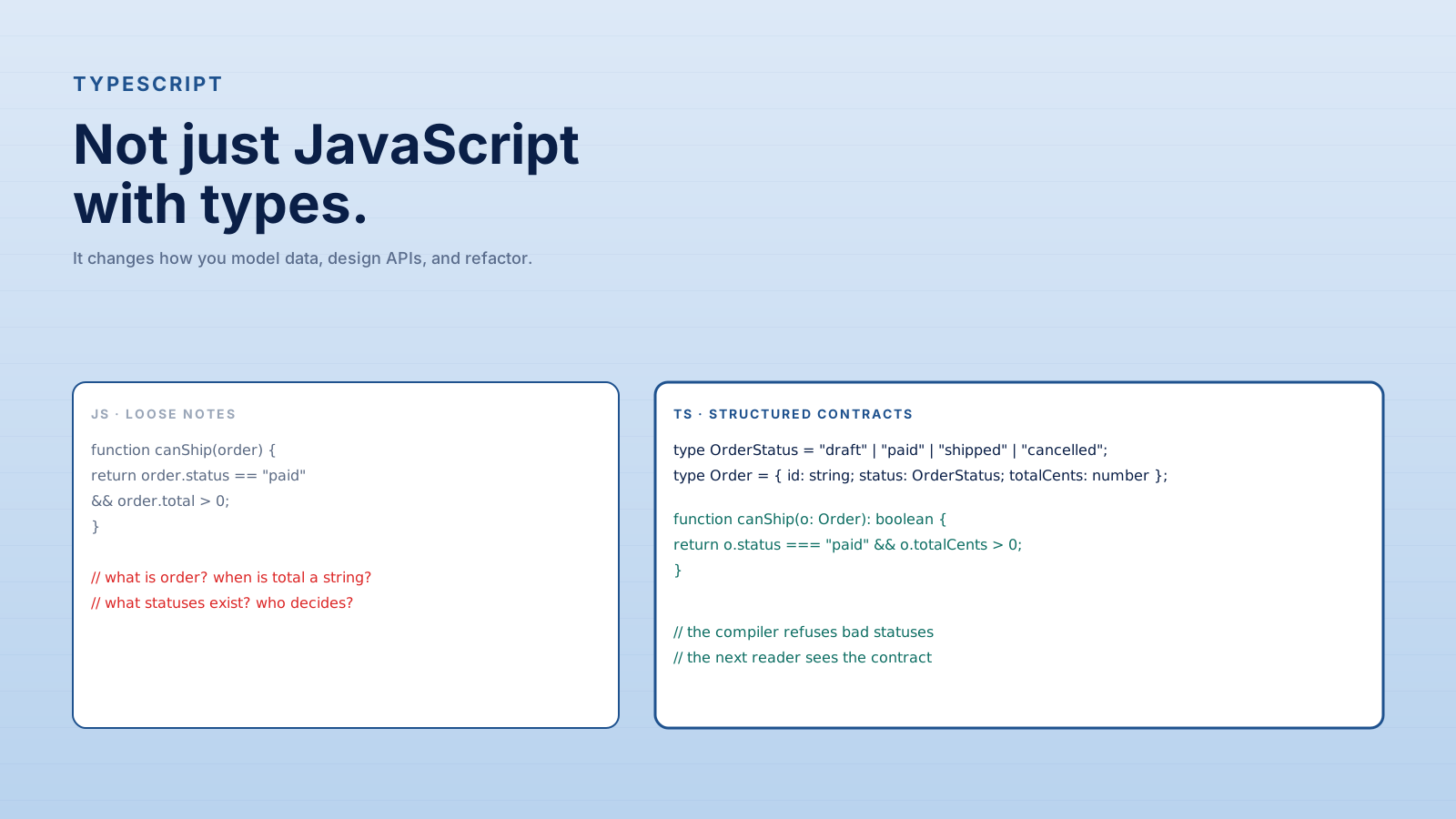
When you write function canShip(order) in plain JavaScript, the function works. It also leaves four hidden questions unanswered: what is order, what statuses exist, when is total a string vs a number, and what happens when the order is undefined? You usually find out from production logs.
When you write function canShip(order: Order): boolean in TypeScript, those questions are now visible. You have to define Order. Defining Order forces you to define OrderStatus. Defining OrderStatus forces you to admit how many statuses really exist and what they mean. By the time the function body runs, half the bugs that would have shown up in production have already been negotiated at the type level.
That's the design pressure. It's not free — you spend time naming things that JavaScript would have let you skip — but it's the kind of work that pays back every time the file changes.
Where Types Change The Shape Of Code
Three places where TypeScript stops feeling like syntax and starts feeling like a tool:
type OrderStatus = 'draft' | 'paid' | 'shipped' | 'cancelled';

type Order = {
  id: string;
  status: OrderStatus;
  totalCents: number;
};

function canShip(order: Order): boolean {
  return order.status === 'paid' && order.totalCents > 0;
}
Three small wins are happening in those eight lines. First, OrderStatus makes invalid statuses impossible at compile time — you cannot accidentally type 'sent' or 'PAID' and discover the bug at runtime. Second, the type annotation on canShip is documentation that cannot drift; if someone changes Order, the function either still compiles or breaks loudly. Third, the next reader knows exactly what data the function expects without scrolling, grepping, or guessing.
None of this is fancy. All of it removes a class of bugs that JavaScript usually finds out about later.
Domain Models Are Better Than Loose Objects
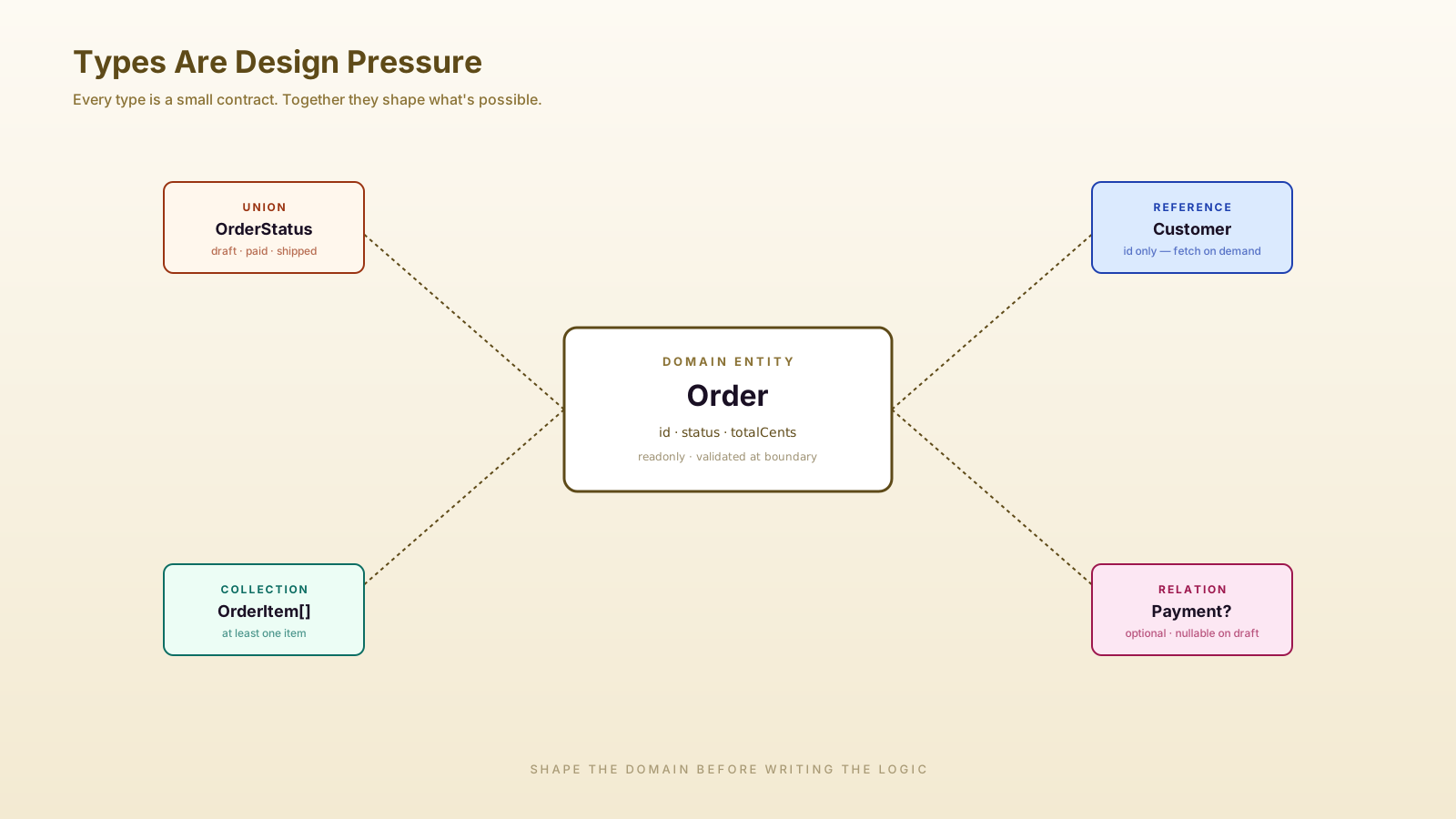
A classic JavaScript pattern is the loose object: { id, status, total, items, customer } returned from one function, passed to three more, each of which assumes a slightly different shape. Three months later nobody knows which fields are required and which are optional.
TypeScript pushes you toward modeling the domain explicitly. That work pays back in places you don't expect: API responses match what the UI wants, internal services agree on field names, and refactors stop breaking distant code.
A useful guideline: name the domain concept before naming the helper. OrderStatus, Money, EmailAddress, UserId — these turn into types you can reuse, validate, and pass around with confidence. function transform(o) does not.
API Design Gets More Intentional
Once your domain has types, API design changes too. You stop returning generic { data: any } from endpoints. You start writing response types that reflect what the client actually needs — not the entire database row.
type UserResponse = {
  id: string;
  name: string;
  email: string;
  createdAt: string;
};

async function getUser(id: string): Promise<UserResponse> {
  const row = await db.users.findById(id);
  return {
    id: row.id,
    name: row.name,
    email: row.email,
    createdAt: row.createdAt.toISOString(),
  };
}
That mapping line — turning the database row into the response shape — looks like ceremony. It also stops the day someone adds a passwordHash column from accidentally leaking it through the API. The boring code earns its rent the first time the schema changes.
Refactoring Feels Less Like Guesswork
The biggest day-to-day TypeScript win is not catching bugs — it's surviving renames. Rename a property in the type, and the compiler immediately points to every call site that needs updating. In plain JavaScript that's a grep with anxiety. In TypeScript it's a checklist.
That single property turns refactoring from a risky operation into a routine one. Teams that refactor freely ship better designs over time, because the cost of changing course is low.
Where TypeScript Doesn't Help
Worth being honest about: types disappear at runtime. JSON crossing the network is unchecked. JSON.parse(req.body) as User does not actually verify the body matches User — it just tells the compiler to trust you. Production data laughs.
The fix is runtime validation at the boundary (zod, valibot, ajv) — schemas that produce both the runtime check and the inferred TypeScript type from one definition. Inside your code, types are the contract. At the network edge, schemas enforce it.
Pro Tips
- Turn on strict mode from day one. A loose TypeScript project gives you the ceremony without enough protection.
- Type the domain, not just the parameters.
OrderStatusreused across files beats four different inline string unions. - Validate at the boundary.
unknown+ a schema parser is the safe way data enters the app. - Use the inferred type — don't restate it.
as constandsatisfiesgive you tighter types than manual annotations in many cases. - Treat type errors as feedback, not friction. When the compiler complains, it's usually telling you something true about the design.
Final Tips
I've seen teams adopt TypeScript and treat every red squiggle as an annoyance to silence with any. They got 5% of the benefit. I've also seen teams treat the compiler as a design partner — modeling the domain first, validating at the edges, refactoring fearlessly. They got the other 95%.
TypeScript pays back the discipline you bring to it. The syntax is the smallest part. The thinking it forces is the real win.
Good luck building code your future self can change without flinching 👊