You know, back in the day, the idea of artificial intelligence (AI) sounded like something straight out of a sci-fi movie. Robots walk among us, doing all our work, while we relax, sip our coffee, and marvel at how cool the future has become. But AI isn't just about robots or super-intelligent machines that mimic humans — it's way deeper than that. And surprisingly, AI might hold the key to solving one of humanity's toughest puzzles: cancer. Crazy, right? Let's break it down.
What Exactly Is AI Anyway?
To put it simply, artificial intelligence is when computers and machines learn to think (well, almost) and make decisions on their own based on data. AI isn't just one thing, though. It's like a big umbrella that covers everything from chatbots to self-driving cars, but what really makes AI shine in medicine, especially in cancer research, is its ability to analyze huge amounts of data faster and more accurately than we ever could. And I mean, HUGE amounts — stuff that would take humans decades to comb through, AI can handle in seconds.
So, while the whole world used to worry about robots taking over, AI was quietly working behind the scenes, getting smarter every day. And guess what? It's already playing a game-changing role in cancer research.
How Can AI Help Find a Cure for Cancer?
Detecting Cancer Early
One of the most challenging aspects of cancer is catching it early enough to treat. By the time we spot it, cancer has often spread, making it tougher to fight. AI can step in here. How? By scanning through thousands of medical images — X-rays, MRIs, CT scans — and detecting even the tiniest abnormal patterns. Think of AI like Sherlock Holmes but for your body. It can find things that the human eye might miss, and when it comes to cancer, catching it early can make all the difference. The sooner we know it's there, the better the chances of treating it effectively.Personalized Treatment Plans
Every person is unique, and so is their cancer. What works for one patient might not work for another. Here's where AI really flexes its muscles. It can sift through mountains of data from previous cases, compare patient profiles, genetic information, and the specific type of cancer, and suggest personalized treatment plans. Instead of a one-size-fits-all approach, AI helps doctors figure out the best treatment for you, specifically. It's like tailoring a suit — only in this case, it's saving lives.Finding New Drugs Faster
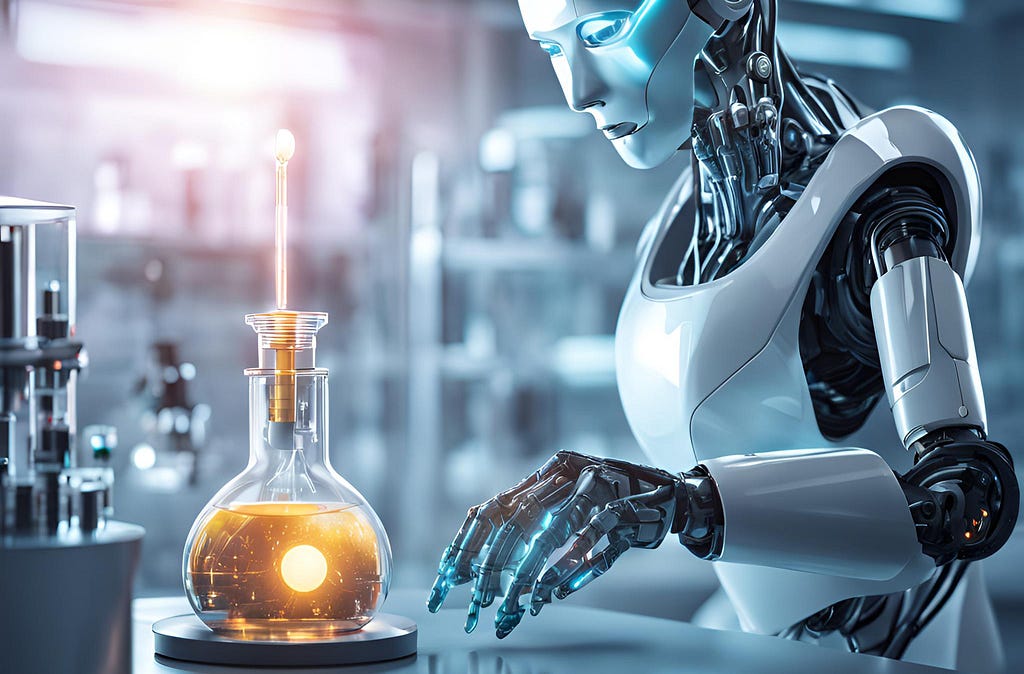
Developing a new cancer drug can take years, even decades. It involves testing thousands of chemical compounds, then running clinical trials, and let's face it — there are more failures than successes. But with AI, we can speed things up. AI can simulate how different drugs will interact with cancer cells, narrowing down the potential candidates much faster than traditional methods. Instead of physically testing each compound in the lab, AI does the heavy lifting by predicting how they'll perform, cutting years off the process.Clinical Trials: Matching the Right Patients
Clinical trials are essential for testing new cancer treatments, but the challenge is finding the right patients. AI can help here too. Scanning through patient records can quickly identify candidates for specific trials based on their medical history, cancer type, and genetic profile. This means trials can be conducted more efficiently, and patients can get access to potentially life-saving treatments sooner.AI and Immunotherapy
Immunotherapy is one of the most promising developments in cancer treatment. It uses the body's own immune system to fight cancer cells, but it doesn't work for everyone. AI can analyze which patients are most likely to respond to immunotherapy by diving deep into their genetic data. By better understanding how different cancers interact with the immune system, AI can help doctors predict which treatments will work best for each individual, maximizing the chances of success.
So, Could AI Actually "Cure" Cancer?
Alright, so will AI wave a magic wand and make cancer disappear overnight? Probably not. Cancer is insanely complex, and even though AI is a massive leap forward, there's still a lot we don't understand. But here's the thing: AI is helping us connect the dots faster than we ever could before. It's enabling us to understand the biology of cancer, find treatments that we never thought possible, and give patients a better shot at beating the disease.
While AI may not "cure" cancer in the way we imagine, it's giving us the tools to come closer to that goal. It's helping us detect cancer early, personalize treatments, find new drugs, and improve patient outcomes in ways we couldn't have dreamed of even a few years ago.
What's Next?
The real beauty of AI is that it's constantly learning and improving. As more data is fed into AI systems, they become even more precise, more accurate, and more powerful. And it's not just about cancer — AI is reshaping healthcare as a whole. From diagnosing diseases to predicting outbreaks, AI is making healthcare smarter, faster, and more accessible.
But we need to remember, AI is a tool. It doesn't replace doctors, researchers, or the human element in healthcare. Instead, it works alongside us, helping us make better decisions and improve lives.
In the end, AI might just be the game-changer we've been waiting for, the breakthrough that finally brings us closer to a world where cancer is no longer the unbeatable enemy it once was.
It's wild to think how far we've come from those days when the idea of AI seemed absurd. We're now living in a time where artificial intelligence is already making waves in medicine, and it's only going to get better. So, while your professor may have laughed at the idea of AI curing cancer, it turns out, he might have been onto something after all.
AI isn't just the future — it's happening right now, and it could be the key to unlocking a world without cancer.