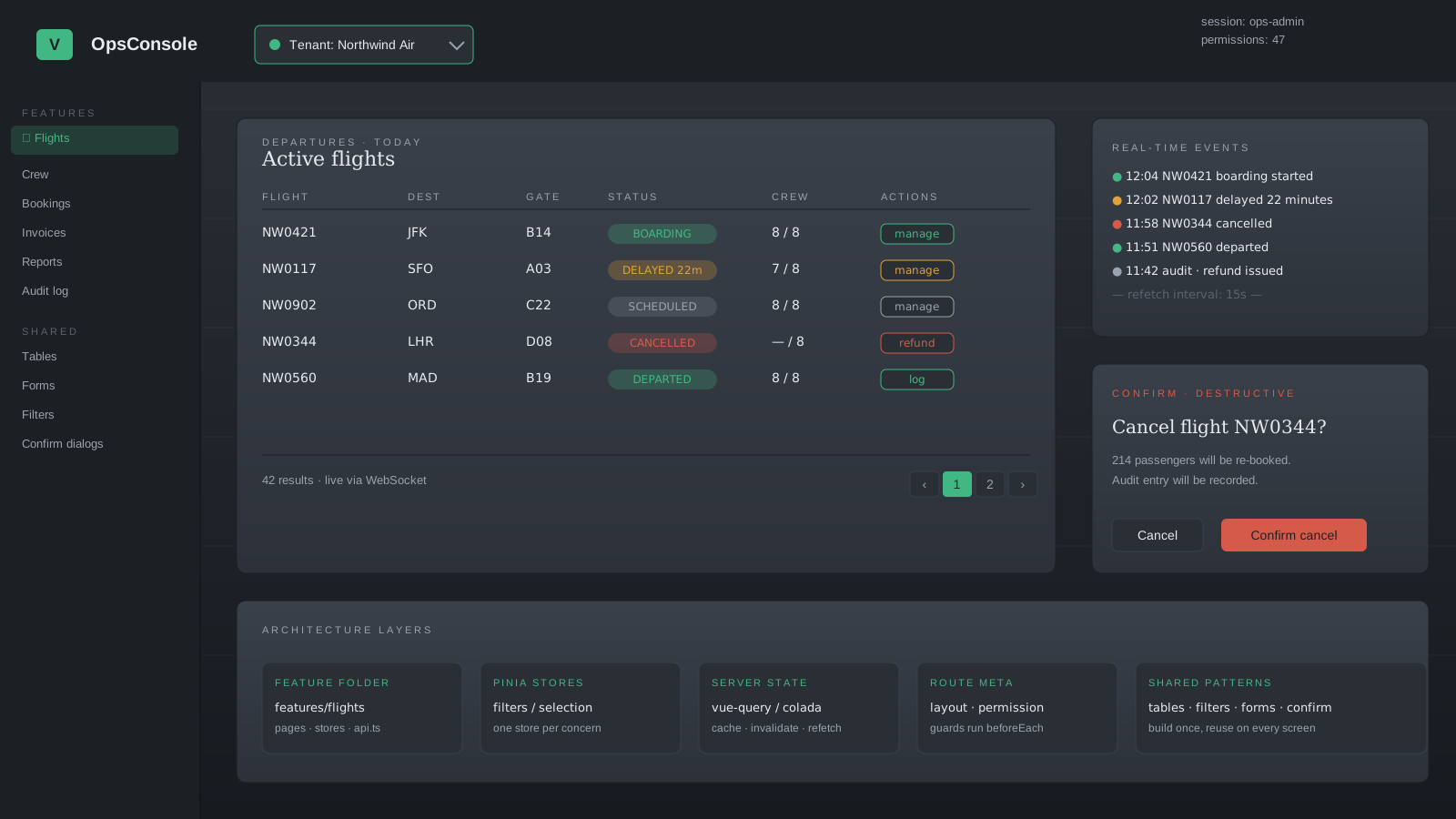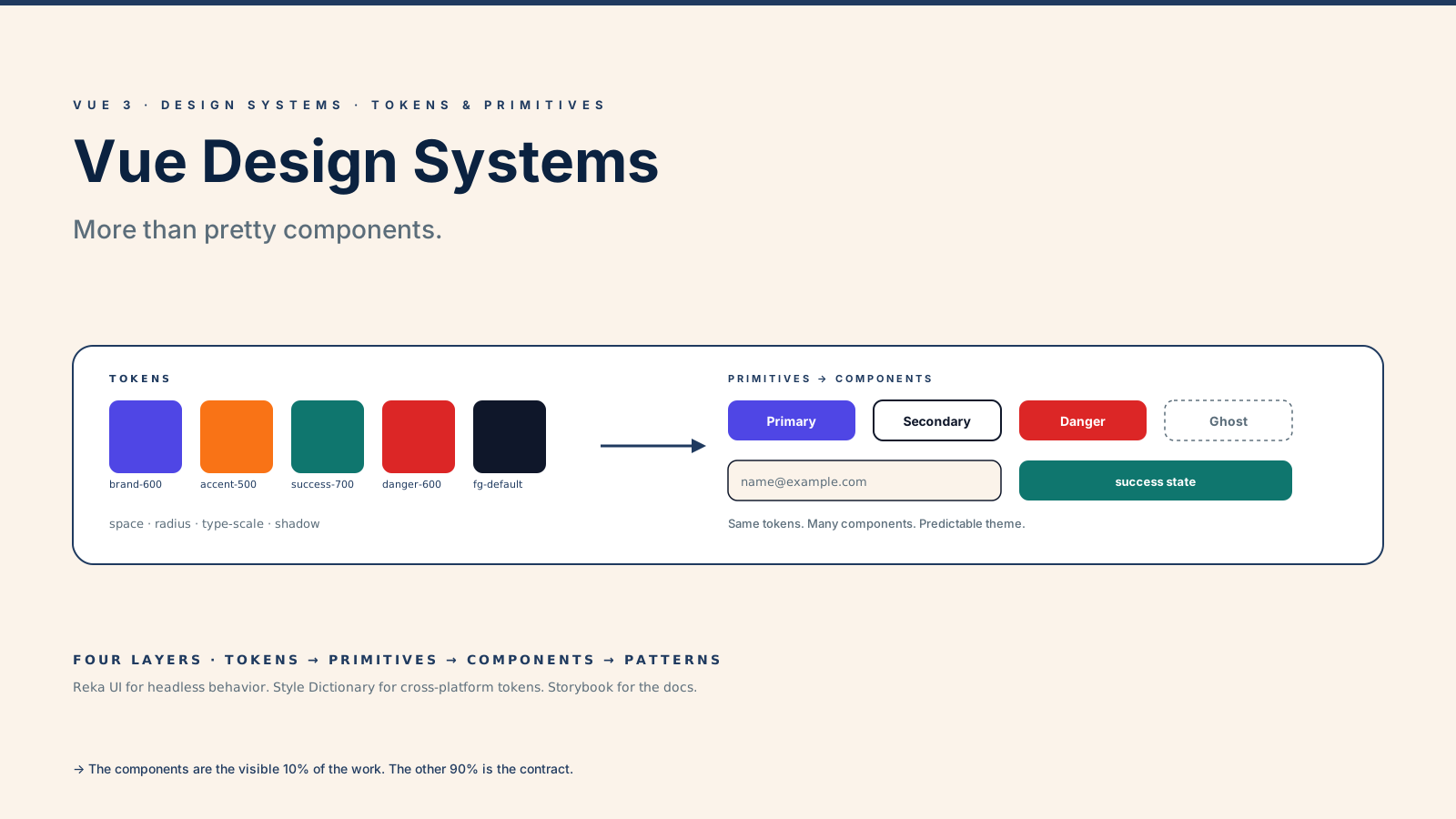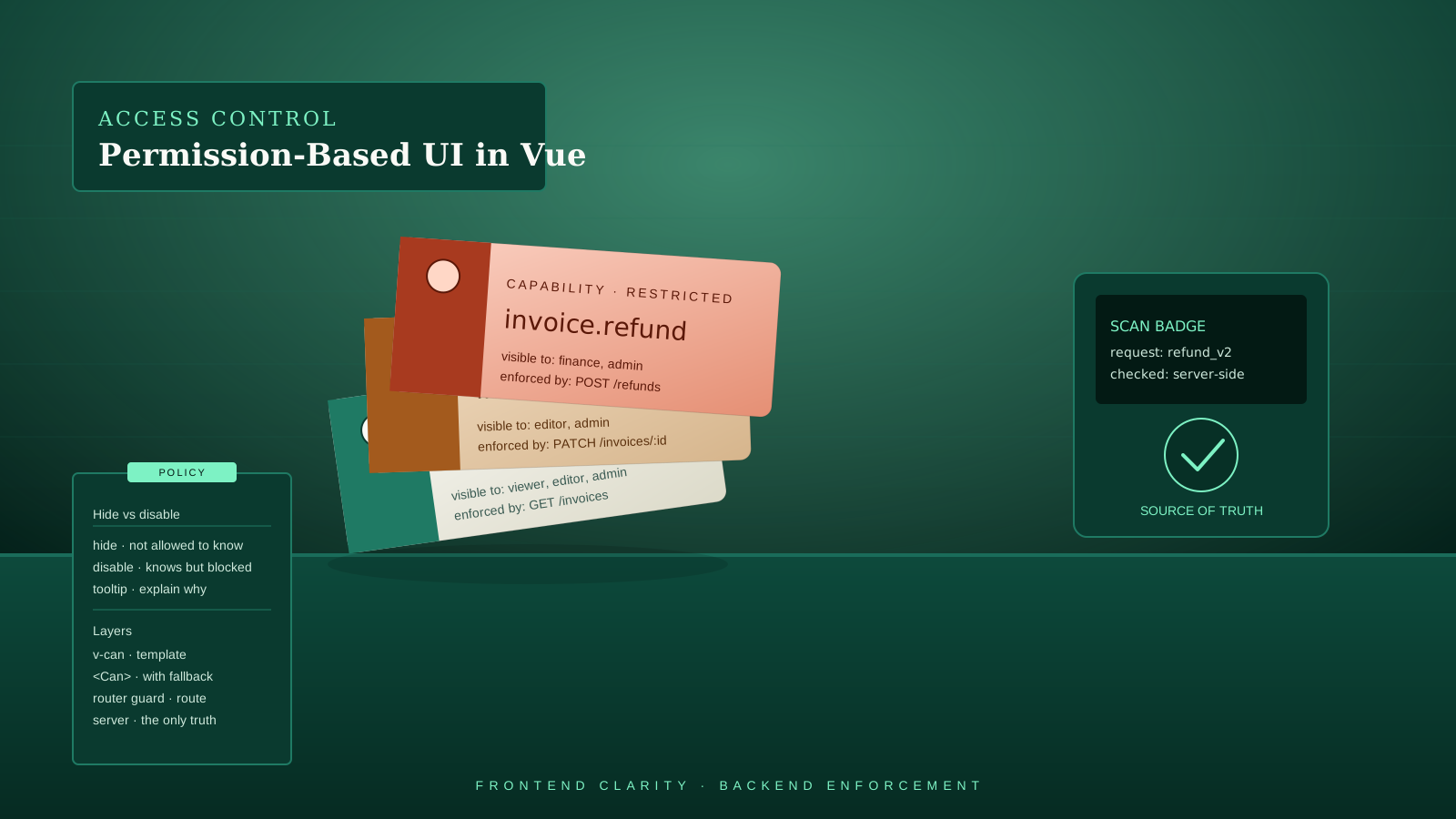

Vue's reputation in 2025 is interesting. The hype cycle has clearly moved on — to React Server Components, to whatever framework Vercel showcased last week, to whichever signals library Twitter has decided is the new gold. Meanwhile, every team I work with that actually ships Vue is having a normal time. Features land, tests pass, the dev server boots in two seconds, and nothing about the framework is forcing them to rewrite anything.
That gap between "what's loud" and "what works" is the most honest thing I can say about Vue heading into 2026. It is mature in a way that doesn't generate conference talks. It is also, in places where the conversation is moving — Vapor mode, signals, server components — quietly doing the work without picking fights.
This is a forward-looking piece written from late 2025. I'll be honest about what's stable, what's experimental, and what's still a question mark. If you're choosing a framework for the next two years, you deserve the version that doesn't oversell.
Vue 3.5 Is The Floor
Vue 3.5 (September 2024) is the version most teams should be on as we head into 2026. It made reactive props destructuring stable, added useId for SSR-safe IDs, useTemplateRef for typed refs, and lazy hydration for SSR scenarios where you don't need every component eager.
<script setup lang="ts">
import { useTemplateRef, onMounted } from 'vue'

const input = useTemplateRef<HTMLInputElement>('input')
onMounted(() => input.value?.focus())
</script>

<template>
  <input ref="input" />
</template>
That's the level of polish Vue 3.5 added — small, useful, well-typed primitives that replace patterns the community had been writing by hand. The migration from 3.3 or 3.4 to 3.5 is essentially free in most apps.
Reactive props destructuring is the change that quietly improves more code than people noticed. const { label, count = 0 } = defineProps<...>() now keeps reactivity, so you can destructure props at the top of <script setup> and use them like normal variables. Defaults work without withDefaults. The cumulative effect on a real codebase is that components read shorter.
Vapor Mode Is In The Lab
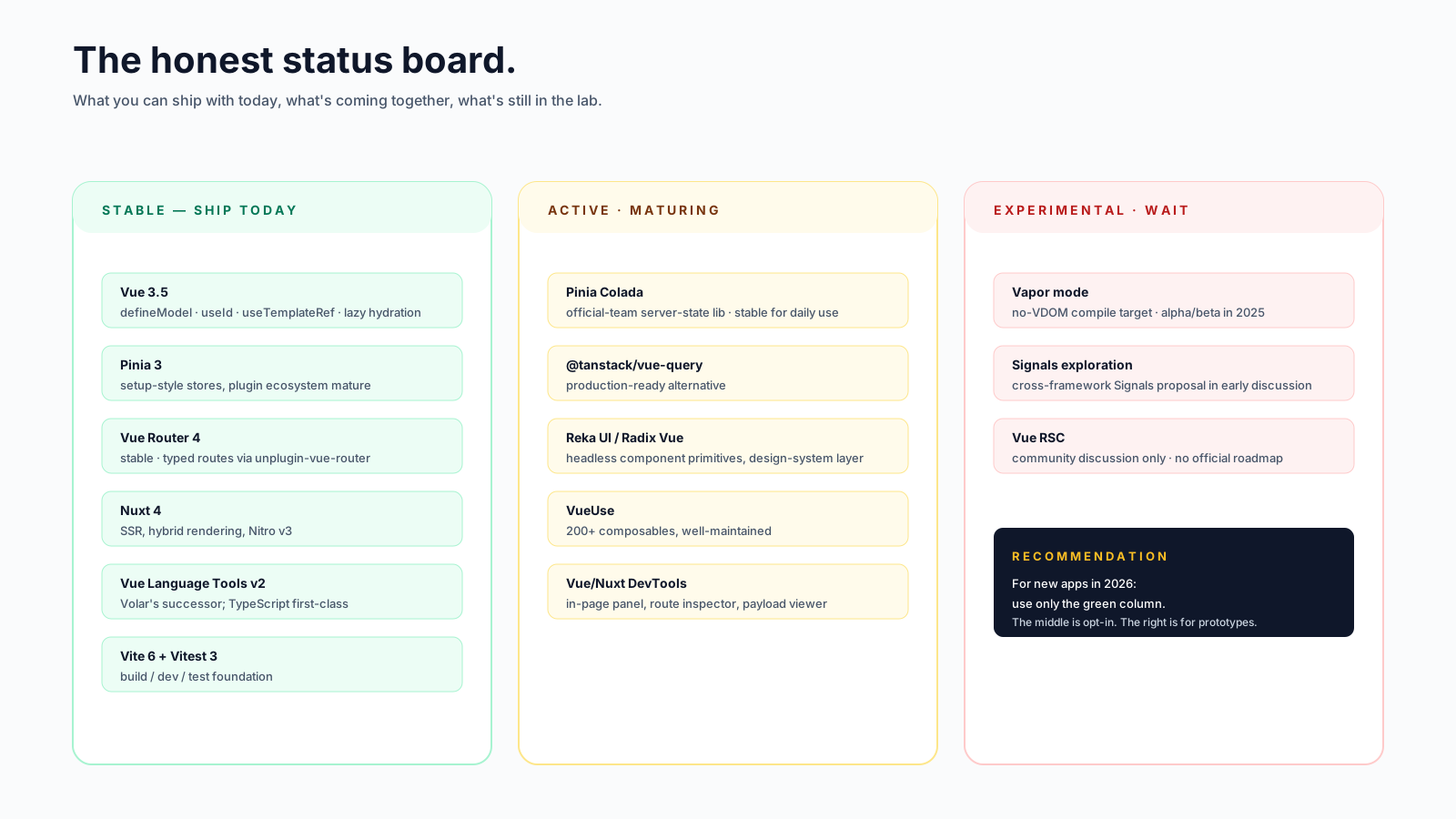
Vapor mode is the one piece of the Vue roadmap that gets the most "is it ready yet" questions. Honest answer: closer than it was a year ago, still not the production answer. It's a separate compiled output mode that produces direct DOM-manipulating code instead of a virtual DOM, with the goal of being faster and smaller for components that opt into it. Vue 3.6 beta (late 2025) shipped Vapor as opt-in experimental — closer than "in the lab" suggests, but the constraints (no virtual DOM means some patterns don't transfer) and the partial component-library coverage still make it a per-component optimisation rather than a default. The Vue team has been clear it will land incrementally rather than as a "switch the whole app over" event.
What that means practically: don't plan a 2026 migration around Vapor. Plan for it the same way you'd plan for any opt-in optimization — knowing it might land for hot paths or specific component trees, while the rest of your app stays on the standard runtime. The interesting case is libraries that want to ship components that are fast in both modes, and that's a problem the team is still working through.
If you want to track it honestly, watch the Vue core repo and the RFCs, not Twitter. The framing on Twitter is usually a year ahead of reality.
Signals Are Being Discussed, Not Adopted
The signals conversation — the TC39 proposal, frameworks experimenting with native signal primitives — has reached Vue. Vue's reactivity is already signal-shaped under the hood (refs and computeds are essentially signals with a different surface), so the conversation in the Vue community is less "do we need this" and more "do we expose the lower-level primitives directly."
The status as of late 2025 is exploration. There is interest, there have been discussions in RFC threads, and Evan You has commented on alignment with the TC39 proposal. There is no commitment to a breaking API change, and the existing ref/computed/watch surface is not going anywhere. If you're writing Vue today, the way you write reactivity is the way you'll write reactivity through 2026.
What might change is how libraries integrate. A standardized signal protocol would make cross-framework state libraries simpler. That's the slow win, and it doesn't ask you to change your code.
Server Components Are A Conversation
React Server Components have shaped a lot of the framework discussion in 2024 and 2025. Vue's response has been measured — Nuxt has Server Components and Islands today (<NuxtIsland>, <ClientOnly>), and they've been used in production for a while. Whether Vue itself adopts an RSC-style model is an open question that the team has discussed publicly without committing to.
The honest read: Vue's approach to "render this on the server, hydrate the rest" already works well through Nuxt. The thing the React community is excited about (an integrated RSC model) is something the Vue community is watching, learning from, and not in a rush to copy if Nuxt's existing primitives keep solving the problem.
If you need server-rendered pages with interactive islands today, Nuxt 4 with islands is the production answer. If you're hoping for a Vue-core RSC story to land in 2026, plan for "maybe, later" rather than "definitely, soon."
The Boring Layer Is Doing The Work
The reason Vue feels productive in 2026 isn't the headline features. It's the layer underneath that has gotten very good without anyone making noise.
Pinia is the canonical store. The setup-style API (defineStore('id', () => { ... })) plus storeToRefs covers basically everything teams used to argue about with Vuex modules. Pinia Colada (the server-state companion) is maturing as a Vue-native alternative to TanStack Query.
Vue Router 4 is the canonical router, with named views, route meta, typed routes via unplugin-vue-router, and navigation guards that have been stable for years.
Vite is the dev server and build tool. Six dot somethings into Vite's lifecycle, and the boot time is still the thing reviewers notice when switching projects.
VueUse is the utility library most teams reach for — useStorage, useMediaQuery, useEventListener, useIntersectionObserver, useDebounceFn, useFocusTrap, all well-tested, all SSR-safe, all typed.
Reka UI (the renamed Radix Vue) is the headless component library that handles accessibility for primitives like dialogs, dropdowns, and combo boxes. Headless UI for Vue is the smaller alternative that covers fewer components but the same idea.
Vue Test Utils + Vitest + Playwright is the testing stack. MSW v2 (with http.get syntax) handles network mocking. None of this is exciting. All of it works.
Nuxt 4 And TanStack Start
Nuxt 4 (stable since 2025) is the full-stack option. File-based routing, SSR/SSG, server routes, modules for everything from auth to content, hybrid rendering modes. It's the answer for "I need a real app with a real backend story" and the friction-to-deploy is genuinely low — Vercel, Netlify, Cloudflare, Node, edge runtimes all work.
TanStack Start is positioning itself as an alternative for teams who want a Vite-style SPA flavor with first-class data loading and routing primitives, but without Nuxt's full meta-framework footprint. It's newer and the Vue story specifically is still developing as of late 2025; the React side is further along. Worth tracking, but Nuxt is the production answer for now.
For a plain Vite + Vue app that wants Nuxt-flavored ergonomics without Nuxt itself, unplugin-vue-router plus unplugin-auto-import plus a handful of VueUse composables gets you most of the way there.
Where Vue Is Still Underrated
A few honest claims about where Vue heading into 2026 is genuinely better than its reputation:
- Onboarding new developers is faster. SFCs and
<script setup>produce code that a junior can read on day one. The mental gap between "tutorial" and "production codebase" is smaller than in most ecosystems. - Templates type-check. Volar v2 plus TypeScript 5.x means refactors don't leave broken templates behind. This is no longer a Vue weakness — it's a strength.
- The official packages are official. Pinia, Vue Router, the devtools, and the language tools are all maintained by the core team or close collaborators. There is no "which router did this team pick" question.
- The community is calmer. Less framework drama, fewer breaking changes per year, more time spent on the actual application. For a senior engineer who has done the JS framework thing too many times, this is not a small thing.
Where The Honest Caveats Live
Vue is not the answer to every problem. The places to be careful:
- Hiring in some markets is harder. React still dominates the resume pool. If you're a 50-person team building a React-flavored startup, Vue is a slightly more deliberate choice.
- The RSC-style story is Nuxt-shaped. If you want server components without adopting Nuxt, the answer today is "wait."
- Vapor mode is not the headline yet. If you're picking a framework specifically for the fastest possible runtime in 2026, you're choosing on something that hasn't shipped.
- Some libraries lag. A few headless component libraries land for React first and arrive in Vue six months later. Reka UI, Vue Headless UI, and Vue-specific ports usually catch up, but the lag is real.
The Honest Summary
Vue in 2026 is the productive, boring choice. The fundamentals (SFCs, Composition API, Pinia, Vue Router, Vite, Nuxt) are mature. The experimental work (Vapor, signals, RSC discussion) is happening honestly — slowly, in the open, without overpromising. If you're choosing what to build with for the next two years, "Vue plus the canonical stack" is a defensible answer that doesn't depend on any specific roadmap landing on time. That's the kind of choice that ages well.